
How to Be Audit-Ready When You Retire IT Equipment

As organizations move into Q4 compliance reviews and year-end audits, IT asset disposition is one of the areas most likely to surface gaps. The problem usually isn't careless disposal, but the absence of a paper trail that proves otherwise.
This post covers what an audit-ready e-waste process looks like, who needs it, and how to build a disposal process that holds up under scrutiny.
Why IT Asset Disposal Is a Compliance Issue
E-waste intersects with at least three distinct compliance domains:
Data security. Any device that stored sensitive data — customer records, employee information, protected health information, financial data — represents a data destruction obligation. Auditors reviewing compliance want to see that decommissioned devices were sanitized or destroyed in accordance with recognized standards (NIST 800-88, DoD 5220.22-M) and that the process was documented.
Environmental compliance. New York's Electronic Equipment Recycling and Reuse Act (EERRA) prohibits disposal of covered electronics in landfills or with regular solid waste. The EPA's Universal Waste Rule adds a federal layer. Organizations subject to state or federal environmental reporting need to demonstrate that retired equipment was handled by a registered facility.
Asset accountability. For organizations subject to financial audits, IT assets on the books need to be formally retired. Proper disposal documentation closes the loop on the asset lifecycle and prevents questions about missing equipment.
When these three compliance threads converge on a single piece of equipment, an undocumented disposal event is a problem three times over.
What Businesses Need from an E-Waste and Data Destruction Partner
Not all e-waste recyclers are the same, and the difference matters when compliance is on the line. Here's what to look for:
Certified data destruction. A qualified IT disposal partner should perform data destruction to a recognized standard and provide a certificate of destruction for each device or batch.
R2 certification. The R2 (Responsible Recycling) standard, maintained by SERI (Sustainable Electronics Recycling International), is the recognized benchmark for responsible e-waste processing.
NYS DEC registration. For businesses in New York, your recycling partner must hold current registration with the New York State Department of Environmental Conservation.
Business E-Waste Disposal in New York: What the Law Requires
New York businesses have specific obligations under EERRA that don't apply to individual consumers. Covered electronic equipment — including computers, monitors, printers, and televisions — cannot be disposed of with regular solid waste or sent to a landfill. The requirement applies whether you're a small business replacing a handful of workstations or an enterprise clearing out a data center.

For healthcare organizations, the stakes are higher. Devices that stored protected health information require documented data destruction before disposal. Under the HITECH Act, improper disposal of PHI can constitute a reportable breach, with penalties up to $73,000 per violation depending on culpability. The Office for Civil Rights has levied significant settlements against covered entities specifically for device disposal failures, including cases where equipment was donated or sold without proper data sanitization.
Federal contractors face additional requirements under FISMA and are typically required to follow NIST 800-88 sanitization standards before releasing equipment from organizational control.
The cost of non-compliance across any of these frameworks typically exceeds the cumulative cost of years of compliant recycling with a certified partner.
Common IT Disposal Mistakes That Create Compliance Exposure
Most organizations don't fail audits because they disposed of equipment irresponsibly. They fail because they can't prove they didn't. These are the gaps that surface most often:
Using an uncertified e-waste recycler. Informal recyclers, uncertified drop-off programs, and well-intentioned but unvetted donation channels all carry the same risk: if equipment with unwiped data ends up in the wrong hands, the originating organization bears the liability. Data liability doesn't transfer to the recipient.
Batch certificates without device-level records. A certificate of destruction that covers a "batch" of equipment without individual serial numbers can't be matched to your asset register. Auditors pulling a specific device from your books need to see a record tied to that device.
Storing equipment indefinitely. Old servers, retired laptops, and surplus networking gear sitting in storage rooms are a common sight in IT departments. Stored equipment accumulates compliance liability over time, depreciates in asset value, and often ends up disposed of hastily when someone finally makes the call. Proactive disposal programs are easier to document than reactive ones.
No written IT asset disposition policy. Auditors review policies, not just records. If your organization doesn't have a written policy covering data destruction standards, vendor selection criteria, and record retention requirements, that absence is itself an audit finding.
What to Do With Old Business Computers and IT Equipment
For businesses evaluating their options for end-of-life IT equipment, the choices break down roughly as follows:
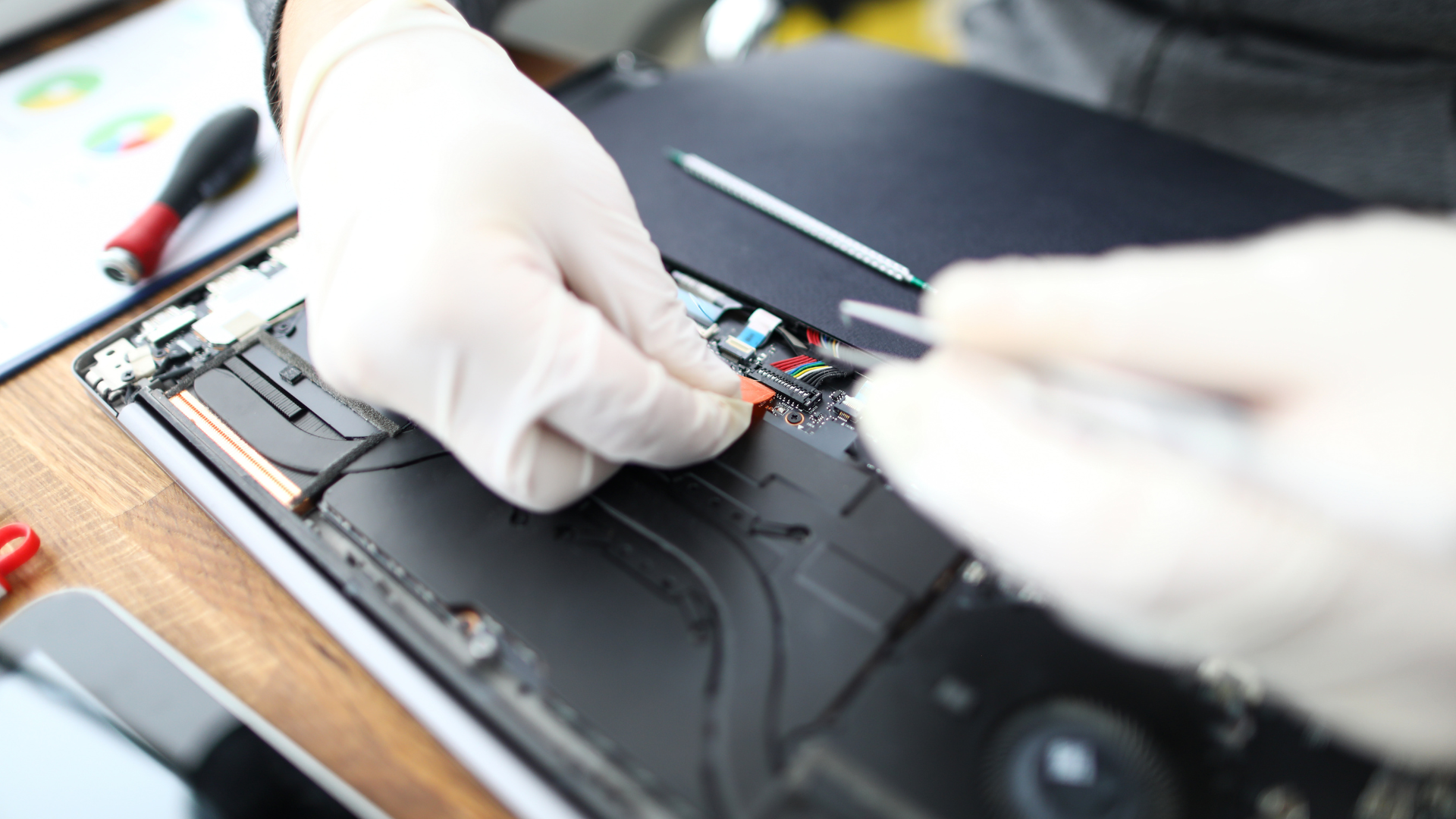
Certified recycling. For equipment that's truly end-of-life, certified e-waste recycling is the appropriate path. Look for a NYS DEC-registered facility with R2-certified downstream partners to ensure your equipment does not end up in landfills.
IT asset recovery. Working or lightly used equipment — including servers, networking gear, newer-generation workstations and laptops — may have residual market value. An ITAD (IT Asset Disposition) provider with asset recovery capabilities can assess equipment worth recovering, often offsetting disposal costs or recovering capital that would otherwise be written off.
Secure data destruction only. Some organizations need certified data destruction on devices they plan to repurpose internally or donate. This is a distinct service from recycling — the device isn't leaving the organization, but the data needs to be verifiably gone before it changes hands.
With Bruin, free or low-cost nationwide pickup is available for businesses managing larger volumes of equipment or multi-site cleanouts. The logistics of IT disposal shouldn't be the barrier to handling it correctly.
Building a Q4-Ready IT Disposal Process
Year-end is one of the most common times organizations move to clear out aging IT inventory. That makes Q4 an ideal time to establish a disposal process that's audit-ready before the next compliance cycle begins.
A practical checklist:
Inventory end-of-life equipment. Identify devices that are decommissioned, in storage, or pending retirement. Include anything that stored sensitive data, regardless of physical condition.
Select a certified partner. Confirm NYS DEC registration, R2 certification, and the ability to provide certificates of destruction before equipment moves.
Document the chain of custody. Match equipment against your IT asset register before it leaves your facility. Update your asset management system with disposal dates and method.
Centralize records. Certificates of destruction, vendor credentials, and chain-of-custody documentation should live in a central, searchable repository — accessible to compliance and legal, not just IT.
Review your written policy. If an IT asset disposition policy doesn't exist, now is the time to create one. If it does, confirm it reflects your current process and standards.
The Standard Auditors Are Looking For
An organization that's audit-ready on IT disposal can respond to an auditor's request with certificates of destruction, proof of the vendor's credentials, an asset register entry showing formal retirement, and a written policy governing the process.

That's not an unreachable standard. It just requires the right partner and a consistent process.
A NYS DEC-certified recycler, Bruin provides responsible e-waste recycling and certified data destruction for businesses across New York and nationwide. Our process is compliant with NIST 800-88 and DoD standards, and we provide certificates of destruction for organizations that need them. Free or low-cost pickup available for qualifying organizations. Contact us for a free assessment.